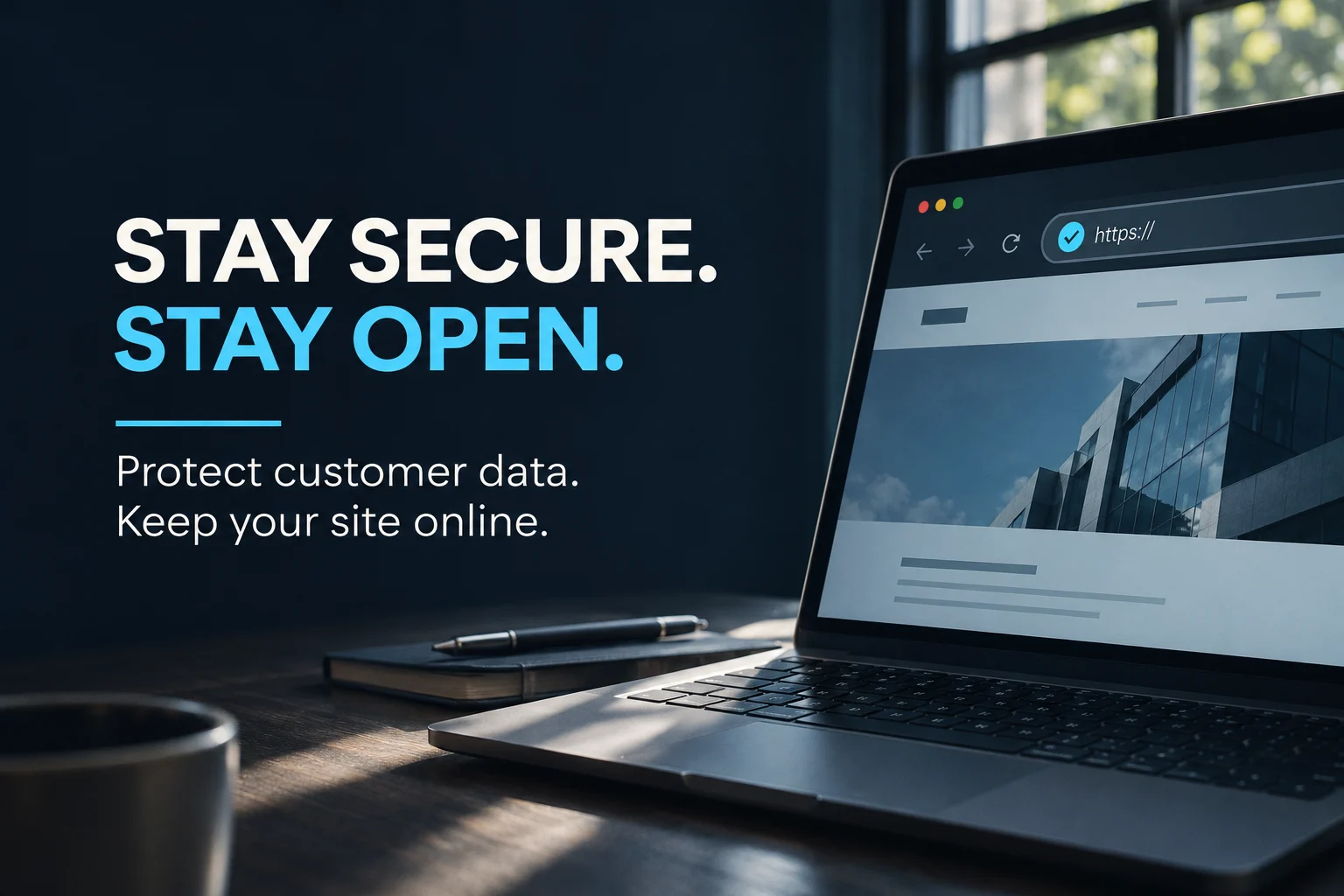
Website security protects your business, customers, and online reputation. Your website may handle payments, collect leads, store login details, and support your marketing. If it gets hacked or becomes unavailable, you could face damaged customer trust, lower search visibility, and lost revenue.
Cybercriminals don’t target only large organizations. Automated attacks can expose websites of any size, particularly those with outdated software, weak passwords, or unpatched vulnerabilities. Understanding common website security threats and taking preventive steps can help protect your business. Here’s what you need to know and how The Growth Shark can help.
Why Website Security Matters for Your Business
Most website attacks do not involve someone specifically targeting your business. Automated tools scan websites for vulnerabilities and attempt to exploit weaknesses they find.
According to a data compiled by WebsiteSetup, about 51% of web traffic in 2026 came from bots, and roughly 37% came from bad bots, based on the Imperva 2025 Bad Bot Report. The same source reports that about 97% of attacks on WordPress sites are automated, and that attempts to exploit newly disclosed flaws can begin within about five hours.
These figures highlight how widespread automated threats have become. Even smaller businesses can become targets because attackers only need to find an exploitable weakness.
A business that updates its website monthly may leave known vulnerabilities unaddressed for weeks. Regular maintenance, security updates, and monitoring help reduce this exposure.
How a Security Breach Affects Your Business

A website security breach can create both immediate expenses and longer-term business losses. Direct costs may include malware removal, website restoration, lost sales during downtime, and possible legal or customer notification expenses.
Longer-term consequences include lost customer trust, browser security warnings, reduced search visibility, and fewer returning customers.
IBM’s 2026 Cost of a Data Breach report put the global average cost of a breach at $4.99 million. These figures reflect organizations across different industries and sizes, so a small business will not necessarily face the same costs. However, they demonstrate how quickly the financial impact of a security incident can add up compared with the cost of prevention.
If you suspect your website has been compromised, acting quickly is essential. Restrict unauthorized access, contact your hosting provider, identify the source of the breach, and restore your website from a verified clean backup if necessary. You should also remove malicious files, update vulnerable software, and review administrator accounts to help prevent another incident.
Common Cybersecurity Threats to Business Websites
Knowing what puts your website at risk can help you identify weaknesses before attackers exploit them.
Outdated plugins and themes. Vulnerable third-party software can expose WordPress websites to attacks, allowing hackers to gain unauthorized access, inject malicious code, or disrupt website functionality. The WebsiteSetup roundup reports that 96% of disclosed WordPress vulnerabilities in 2024 were in plugins, about 4% were in themes, and fewer than 1% were in core. Many of these vulnerabilities could be exploited without requiring a login.
Stolen or weak credentials. Weak or reused passwords can expose website administration accounts. The Verizon 2026 Data Breach Investigations Report found stolen credentials were the top initial access route in 31% of breaches. Two-factor authentication helps reduce unauthorized access risks.
Malware and injected code. Malware can infect website files or databases, redirect visitors, steal form submissions, or distribute spam. A compromised website may appear normal until a security scan or customer report reveals the infection.
Brute-force and bot attacks. Brute-force attacks use automated tools to repeatedly test username and password combinations against your login page. Other malicious bots can scrape website content, submit spam through forms, and generate excessive traffic that affects website performance.
Denial-of-service attacks. A denial-of-service (DoS) attack overwhelms a website or server with excessive traffic or requests, preventing legitimate visitors from accessing it. Distributed denial-of-service (DDoS) attacks use multiple systems to generate traffic simultaneously, making the attack harder to manage. Cloudflare reported mitigating 118.2 million network-layer DDoS attacks in Q3 2026, a +208% increase from the same quarter in 2025
Building Protection Into the Website Development Process
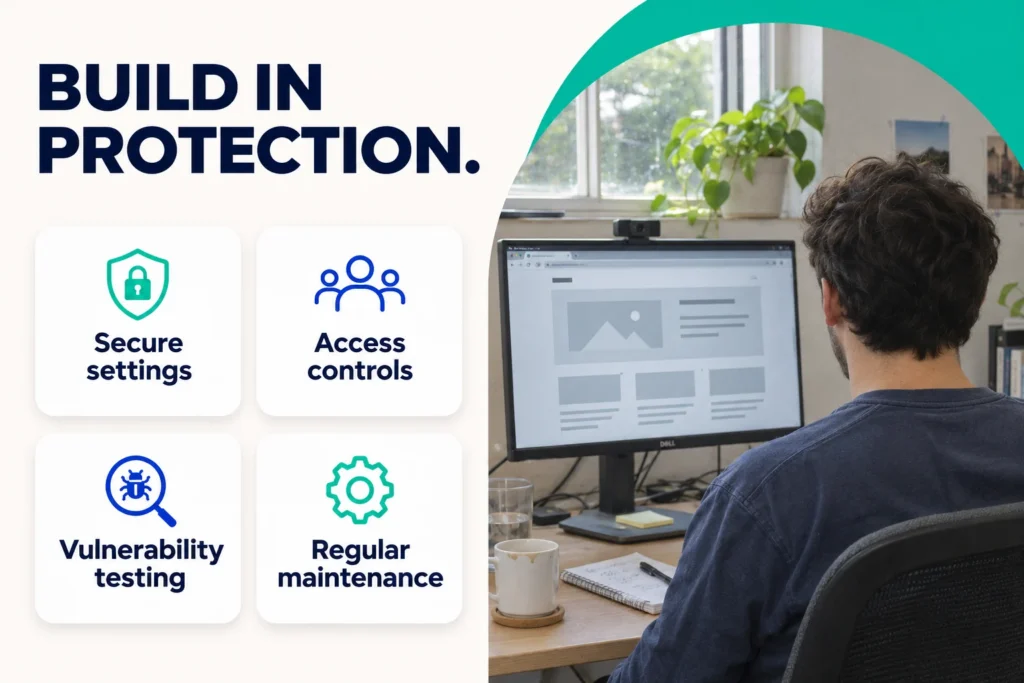
Building a secure website starts during development and requires ongoing attention. Secure configurations, access controls, vulnerability testing, and regular maintenance help reduce risks.
At The Growth Shark, we incorporate security hardening into website launches alongside quality assurance, SEO setup, and team training, making security a priority from the beginning.
Website Security and Hardening Services
Website security hardening strengthens your website, server settings, and access controls to minimize vulnerabilities and prevent attackers from exploiting weaknesses.
Our website security services include:
- SSL certificate installation and renewal
- Web application firewall (WAF) protection
- Malware scanning and removal
- Brute-force and bot protection
- Hardened admin access with two-factor authentication
- Security headers and content security policy configuration
These measures help protect your website against common attacks while reducing the risk of unauthorized access and malicious activity.
Continuous Threat Detection and AI Monitoring
Our AI-powered monitoring continuously identifies unusual activity, flags potential threats, and alerts the team when suspicious behavior requires investigation. It includes:
- 24/7 anomaly detection
- Real-time alerts by email and SMS
- Automated vulnerability patching
- Suspicious login blocking
- Monthly security reports
- An incident response protocol
Traditional security scans often run once a day or once a week. Continuous monitoring helps identify suspicious activity sooner, allowing potential threats to be investigated before they cause further damage.
This is particularly important when attempts to exploit newly disclosed vulnerabilities can begin within about five hours. Identifying unusual activity and responding promptly can help reduce the risk of a security incident affecting your business.
The Impact of Security Issues on SEO and Marketing
Security issues can affect more than your website. They can also put your search visibility, traffic, and marketing investment at risk. When Google identifies malware or harmful content on a website, it may display security warnings in search results or browsers. These warnings can discourage visitors from accessing your website and reduce customer confidence.
Attackers may also inject spam pages, manipulate existing content, or redirect visitors to malicious websites. These changes can affect how search engines interpret your website and potentially damage its search visibility.
If a compromised website becomes slow or unavailable, visitors may struggle to access landing pages or complete forms. This can interrupt lead generation, reduce conversions, and waste paid advertising spend.
Because The Growth Shark brings website design, SEO, paid advertising, and security together, businesses can manage these important areas through one team. From protecting landing pages to maintaining website performance, our integrated approach helps safeguard the digital assets that support your marketing campaigns.
Who Needs Professional Website Security Services?
Every business with an online presence needs website security. However, businesses that handle customer information, process payments, or rely heavily on website traffic face additional risks.
Some examples include:
- Ecommerce businesses that process online payments and store customer information.
- Businesses that collect customer data through contact forms, registration pages, and customer accounts.
- SaaS platforms that manage user accounts, subscriptions, and sensitive business data.
- Nonprofits that rely on online donations, fundraising campaigns, and advocacy platforms.
- Local service businesses that generate inquiries, bookings, and customer leads through their websites.
Regardless of your industry or business size, protecting your website helps maintain customer trust and keeps your online operations running smoothly.
7 Ways to Keep Your Website Secure
Whether or not you work with a professional security team, following these practices can help reduce your website’s exposure to common threats.
Keep your website software updated.
Regularly update your CMS, plugins, themes, and other website components to fix known security vulnerabilities.
Remove unused plugins and themes.
Delete software you no longer use to reduce potential entry points for attackers.
Use strong passwords and two-factor authentication.
Create unique passwords for every account and enable two-factor authentication for administrator access.
Back up your website regularly.
Schedule regular backups and periodically test the restoration process to ensure your website and data can be recovered.
Use a firewall and SSL certificate.
Install an SSL certificate to enable HTTPS and use a web application firewall (WAF) to filter potentially harmful traffic.
Limit administrator access.
Give administrative permissions only to authorized team members who need them.
Monitor your website and review security alerts.
Track website activity, review security notifications, and investigate suspicious behavior as soon as possible.
Managing these security measures requires ongoing attention and technical expertise. If you would rather focus on running your business, The Growth Shark can help manage your website’s security and maintenance.
Protect Your Website With The Growth Shark
A secure website helps protect your customers, maintain your online reputation, and keep your business running. The Growth Shark provides website security solutions designed to identify vulnerabilities, prevent common attacks, and protect your digital presence.
Book a free call with our team to review your website’s security, identify potential vulnerabilities, and explore practical ways to strengthen its protection. Get a clearer understanding of your security needs with no pressure or long-term commitment.