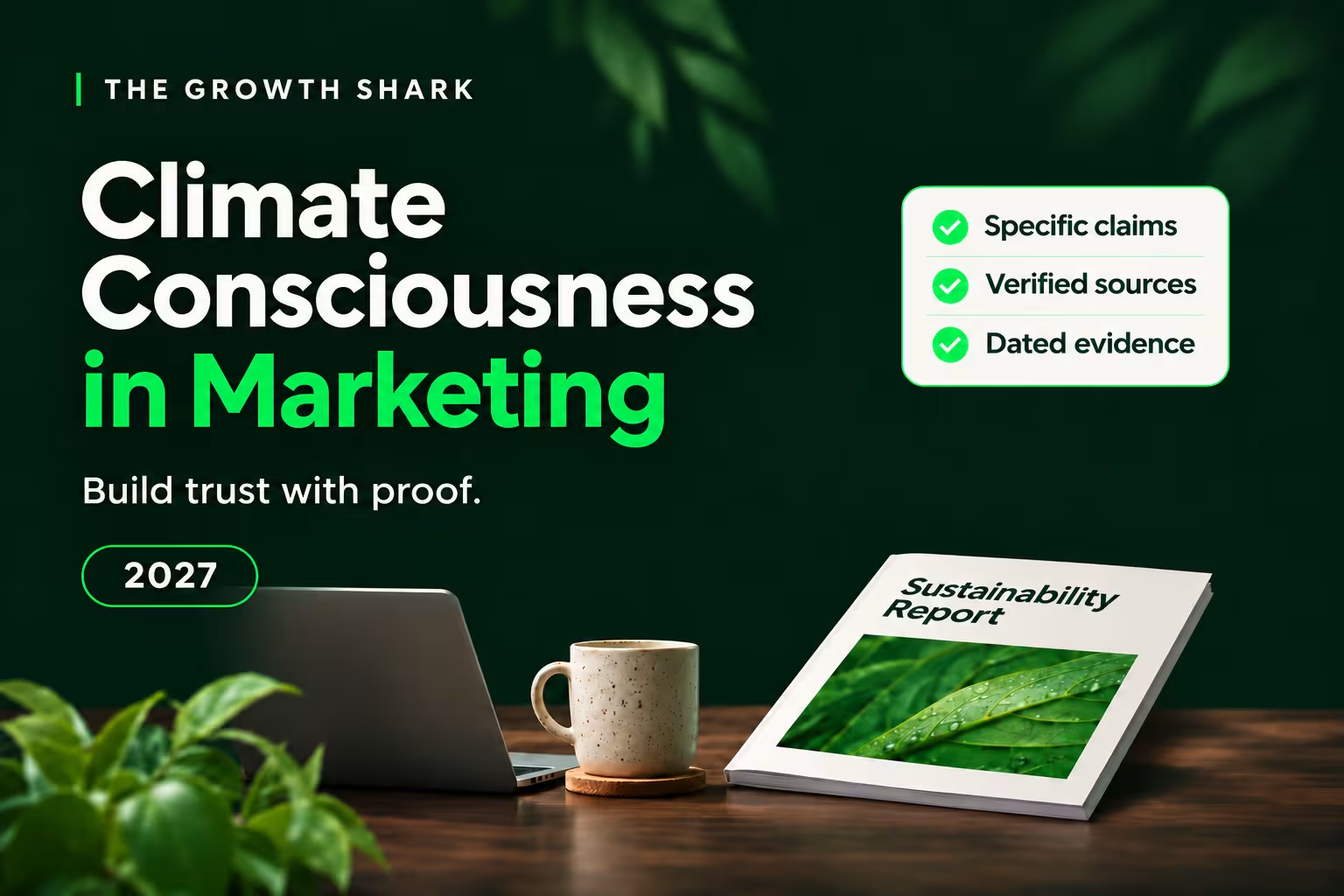
Customers have become more careful about the environmental claims brands make. At the same time, regulators in the US and Europe are paying closer attention to how those claims are written and backed up. For marketers heading into 2027, this is changing how businesses approach their marketing strategies. Saying your brand cares about the planet is no longer enough. You need to show it, in plain language, with proof.
This is the idea behind Climate Consciousness in Marketing (CCIM), an initiative from The Growth Shark that helps businesses adopt more responsible climate-conscious marketing practices.
What Is Climate Consciousness in Marketing?
Climate Consciousness in Marketing is a way of promoting your business that treats climate claims as something to earn, not something to decorate your brand with. It means communicating about sustainability with specific, verifiable information, and making marketing decisions with climate impact in mind.
Our CCIM resource is built around three words: educate, encourage, and organize. Education comes first. Marketers, owners and approvers need to understand what makes a climate claim credible before they publish one. From there, brands can encourage their customers to act and organize around causes that matter to both.
How Sustainability Is Changing Marketing in 2027
Audiences are paying attention. Research on climate-conscious shoppers has been tracking this group for years. A 2022 study from Volta Inc., published on YouGov, found that 55% of US consumers fit the climate-conscious profile, and that most of them prefer ads that speak to their specific needs. The study is a few years old, but the direction has held: a large share of buyers wants brands to be clear about their values.
Trust is low. Our CCIM page cites a figure that 71% of consumers distrust corporate climate claims. Whatever the exact number in your market, vague green language is easy to doubt. Brands that give specifics stand out simply by being more believable.
This shift makes climate-conscious marketing an important part of building long-term customer relationships, particularly as buyers become more selective about the brands they support.
The rules are tightening. In the US, the FTC Green Guides remain the reference point for environmental marketing claims. They discourage generic claims such as “eco-friendly” unless the claim is clearly qualified and supported. In the European Union, Directive 2024/825 targets vague environmental claims, uncertified sustainability labels and carbon neutrality claims that rely only on offsets, with enforcement beginning in September 2026, according to a summary from Grounded. If you sell to EU customers, or work with partners who do, this affects you directly. Check the details with a legal adviser for your own situation.
The Risks of Greenwashing in Marketing
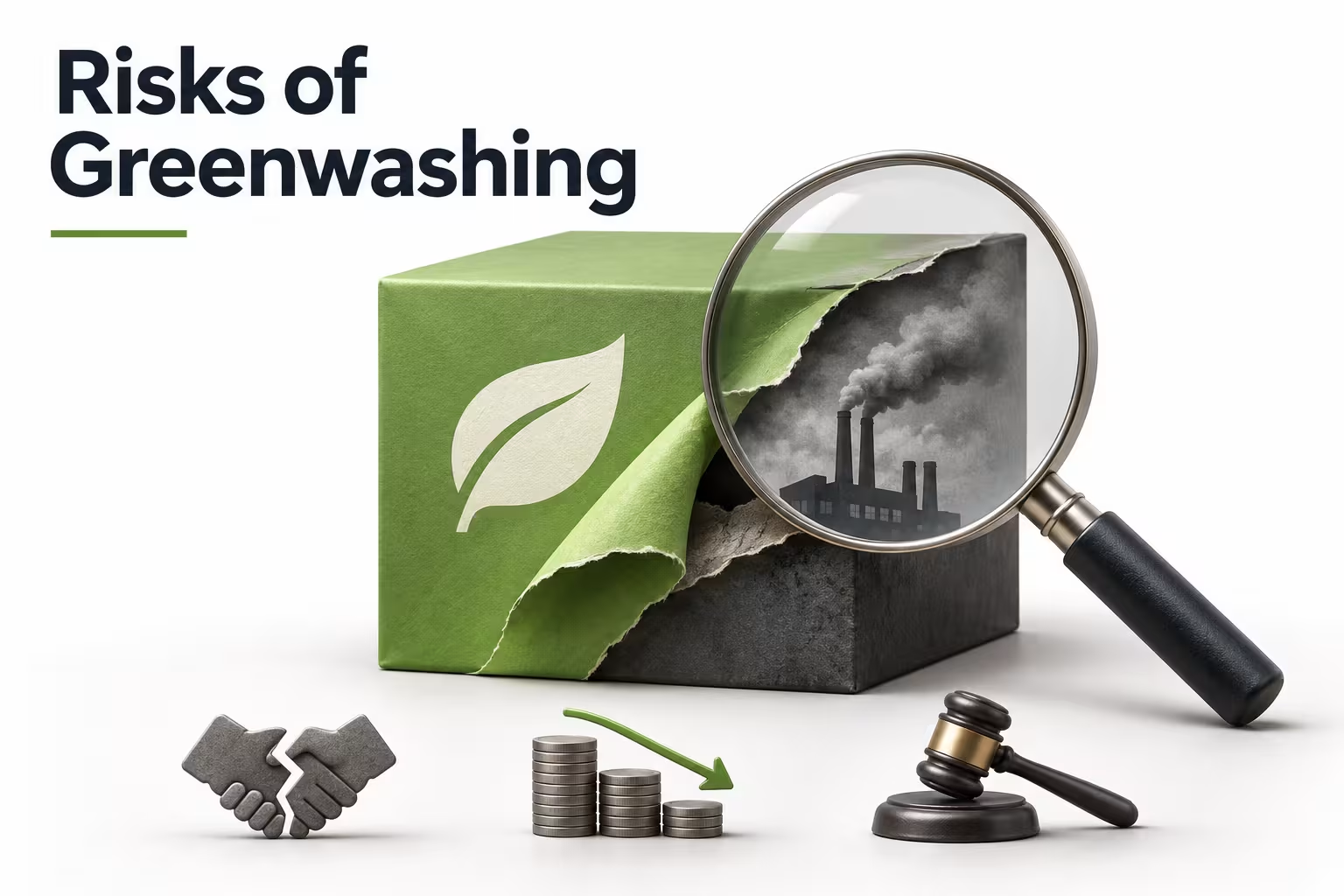
Greenwashing is the practice of making a product or company sound more environmentally friendly than it is. It usually does not come from bad intent. More often, a team writes a hopeful line, nobody asks for the source, and it goes live.
The results can include legal exposure, press criticism, and a loss of customer trust that takes years to rebuild. Well-known examples include Volkswagen’s emissions scandal and the UK ban of HSBC’s tree-planting ads. On the other side, brands such as Patagonia and Oatly have earned credibility by being open about their impact, including the parts that fall short.
A Simple Three-Step Check For Every Climate Claim
CCIM gives marketers a practical test to run before publishing anything related to sustainability.
- Say exactly what changed. Name the scope and the metric, not the mood. “Our packaging is greener” tells a customer nothing. “We cut packaging weight by 18% across our top five products” gives them something to evaluate.
- Name the proof source. Point to a certification, a report or a third-party audit. If you cannot name the source, the claim is not ready.
- Add the evidence date. Claims go out of date. Stating when the data was measured keeps your message honest and shows you are keeping track.
Teams that follow this routine write shorter, clearer copy and avoid most of the common greenwashing mistakes.
Practical Ways to Bring Climate Awareness Into Marketing
These climate-conscious marketing practices can help businesses make sustainability a consistent part of their messaging rather than an occasional campaign theme.
Audit your current messaging. Review your website, ads, emails, and social posts for broad terms like “sustainable,” “green” and “eco-friendly.” Mark every claim that lacks a metric or a source.
Rewrite with proof. Replace vague adjectives with a scope, a number, and a source. Where you have no proof yet, remove the claim until you do.
Be open about trade-offs. No company has a perfect record. Explaining what you are still working on often builds more trust than a polished story.
Choose partners with care. Work with certifiers, suppliers, and causes that you have checked. A partnership can help your credibility or hurt it, depending on who it is.
Report on results. Share progress on a regular schedule with verified, dated data. Annual impact summaries, short updates on your website and honest posts on social media all work. If you report company greenhouse gas emissions, use an established framework such as the GHG Protocol Corporate Standard.
Make your marketing efficient. Climate consciousness also applies to how you run campaigns. Cutting wasted ad spend, trimming heavy page weight, and avoiding unnecessary sends reduce cost and impact together.
Where This Fits In Your Growth Plan
Climate-conscious marketing does not replace your core marketing work. It improves it. Clear, specific claims help your SEO content earn trust, make paid ads more believable, and give your emails stronger reasons to be opened. They also give AI search tools accurate facts to quote when people ask about your brand.
For mission-driven companies, B Corps and sustainability-focused businesses, this is a natural fit. The work you have already done deserves to be communicated well.
Work With The Growth Shark On Climate-Conscious Marketing
If you want to enter 2027 with marketing that is honest, effective, and ready for closer scrutiny, The Growth Shark can help. Our CCIM services include a messaging audit to flag unsupported claims, campaign strategy for climate-conscious audiences, impact reporting with verified data, and access to our network of vetted green partners.
Book a free strategy call with our team. We will review how your brand talks about climate today, point out where claims need stronger proof, and outline a plan for growth you can stand behind.