Consumer expectations are shifting fast. Shoppers today are more informed, more values-driven, and more selective about the brands they support. If your business sells directly to consumers, the pressure to stand for something beyond your product has never been greater. Sustainability in marketing is no longer a buzzword reserved for eco-friendly startups — it is a strategic imperative for any B2C brand that wants to build lasting loyalty, attract modern buyers, and stay relevant in a competitive market. Understanding why it matters and how to do it right can be the difference between a brand that thrives and one that gets left behind.
The Shift in Consumer Values
Something meaningful has changed in the way people buy. Consumers, especially Millennials and Gen Z – are paying close attention to the values behind the brands they choose. They want to know where products come from, how they are made, and whether the company shares their concern for the planet and society. This is the foundation of sustainable consumer behavior, and it is reshaping every industry from fashion to food to personal care.
Studies consistently show that a significant portion of consumers are willing to pay more for products from companies committed to positive social and environmental impact. That is not a small audience — it is a growing majority. B2C brands that ignore this shift risk losing ground to competitors who take sustainability seriously and communicate it authentically.

What Sustainable Marketing for B2C Brands Actually Means
Sustainable marketing for B2C brands goes beyond slapping a green label on your packaging. It means aligning your entire marketing strategy with values of transparency, responsibility, and long-term thinking. It involves how you position your brand, the stories you tell, the claims you make, and the actions that back those claims up.
There are a few core pillars that define this approach:
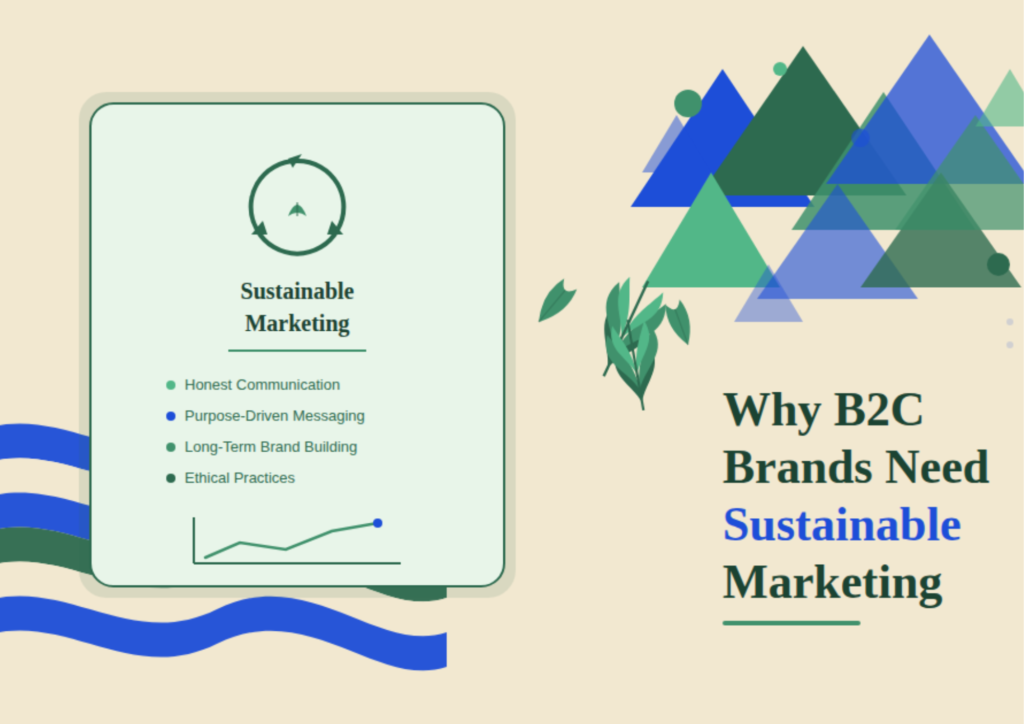
- Honest communication: Making only the claims you can substantiate. Greenwashing — overstating or fabricating environmental credentials — is not only unethical, it is increasingly illegal in many markets and easily spotted by informed consumers.
- Purpose-driven messaging: Connecting your marketing to a broader mission that resonates with your audience beyond the transaction.
- Long-term brand building: Prioritizing customer relationships and reputation over short-term conversions.
- Responsible content practices: Being mindful of the messages you amplify and the imagery you use to represent your brand and your audience.
The Business Case: Growth, Loyalty, and Revenue
It is easy to see sustainability as a cost center — something you do for good PR but not for the bottom line. That perspective is outdated. Purpose-driven marketing has a direct and measurable impact on business performance.
Brand Loyalty Deepens
When customers feel that a brand shares their values, they do not just buy once — they come back. They also become advocates, recommending your products to friends and family without being prompted. Word-of-mouth from a values-aligned audience is one of the most powerful and cost-efficient forms of marketing available to B2C businesses.
Customer Acquisition Becomes More Efficient

A strong sustainability story gives your paid and organic marketing efforts more traction. Content that highlights ethical marketing practices and genuine impact tends to earn more shares, more engagement, and more organic reach. Your acquisition costs go down when your message resonates deeply with the right audience.
Premium Positioning Becomes Possible
Brands with a credible sustainability narrative can often command higher price points. Consumers are not just buying a product — they are buying alignment with their identity and values. That emotional connection justifies a premium and reduces price sensitivity over time.
Ethical Marketing Practices That Build Real Trust
Authenticity is everything. Consumers have highly tuned radar for brands that perform sustainability without practicing it. The brands that win are the ones whose internal operations, supply chain decisions, and community investments match their external messaging.
Here are some ethical marketing practices that B2C brands should consider integrating:
- Transparent sourcing stories: Show your audience where materials come from and how workers are treated. Video content, behind-the-scenes features, and supplier spotlights all work well here.
- Impact reporting: Share real data on your environmental and social footprint. Admitting where you are still improving builds more trust than projecting perfection.
- Community partnerships: Align with causes and organizations that are genuinely connected to your brand’s mission, not just trending topics.
- Inclusive representation: Reflect the diversity of your actual and potential customer base in your creative work.
- Reduced waste in marketing production: Digital-first strategies, responsible print use, and sustainable event planning all signal that your commitment goes beyond your product.
How to Build a Purpose-Driven Marketing Strategy
Knowing that sustainability matters is one thing. Building a marketing strategy around it takes deliberate planning. Here is a practical framework for B2C brands ready to make the shift.
Start With Your Brand’s Core Values
Sustainability initiatives should grow from something genuine. Before crafting campaigns, identify what your brand actually stands for and where you already have meaningful impact or intention. Your marketing will be far more compelling when it reflects real conviction rather than a marketing team’s projection.
Define Your Audience’s Values
Different consumer segments care about different issues — climate, labor rights, animal welfare, community investment, and more. Understanding what matters most to your specific audience helps you focus your messaging and choose the right causes and conversations to enter.
Create Content That Educates and Inspires
Purpose-driven marketing performs best when it adds value to the consumer’s life — not just promoting your product, but helping your audience make more informed decisions, live in line with their values, or discover something meaningful. Blog content, social media storytelling, and email campaigns can all serve this function.
Measure What Matters
Track engagement metrics, brand sentiment, customer retention rates, and lifetime value alongside traditional sales KPIs. These numbers tell the fuller story of whether your sustainable marketing approach is building the kind of brand equity that drives growth over time.
Frequently Asked Questions
Why is sustainability important for consumer brands?
Consumer expectations have fundamentally shifted. Shoppers increasingly choose brands that align with their personal values around the environment, social responsibility, and ethical practices. For B2C brands, sustainability is no longer optional — it is a core driver of loyalty, trust, and competitive differentiation.
How does sustainability improve brand loyalty and customer trust?
Sustainability builds loyalty and trust by proving a brand shares its customers’ environmental and ethical values. When consumers see a transparent commitment to positive impact, they feel a deeper emotional connection that goes beyond a simple transaction.
How can B2C brands implement sustainable marketing strategies?
Start by grounding your strategy in genuine brand values, not surface-level trends. From there, focus on honest communication, transparent impact reporting, purposeful community partnerships, and content that educates your audience. Consistency between your internal operations and your external messaging is what makes the strategy credible.
Does sustainability in marketing improve sales and revenue?
Yes — and the evidence is growing. Brands that authentically practice sustainability in marketing see stronger customer loyalty, lower price sensitivity, and higher lifetime customer value. While short-term conversion rates may not spike overnight, the long-term financial benefits of purpose-driven brand building are well documented.
What is the difference between sustainability in marketing and greenwashing?
Sustainability in marketing is backed by real actions, verifiable data, and honest communication. Greenwashing involves making environmental or ethical claims that are exaggerated, misleading, or entirely unfounded. The distinction matters enormously — consumers and regulators are increasingly holding brands accountable for the difference.
How does sustainable consumer behavior affect B2C marketing decisions?
When consumers make purchasing decisions based on values — such as environmental impact, ethical sourcing, or social responsibility — B2C brands must adapt their messaging, positioning, and channel strategy accordingly. Understanding sustainable consumer behavior helps brands reach the right audiences with the right message at the right moment.
Build a Marketing Strategy That Stands for Something
Sustainable marketing is not a trend you can afford to wait out. It is a fundamental shift in how consumers engage with brands and B2C businesses that embrace it early will have a significant advantage. The brands winning today are the ones building real trust, telling honest stories, and connecting with audiences on a values level that goes far deeper than any promotional offer ever could.
At The Growth Shark, we help socially responsible brands develop marketing strategies that are not only effective but built to last. If you are ready to align your brand with what your customers actually care about, contact us today and let us build something meaningful together.