For years, B2B “green” initiatives were a footnote in annual reports—a collection of stock photos featuring wind turbines and saplings. But the landscape has shifted. In a market where 88% of buyers now prioritize long-term value over short-term spikes, sustainable marketing is no longer a moral “nice-to-have”; it’s a competitive requirement for building durable trust. The challenge isn’t just being sustainable; it’s communicating that commitment without the “greenwashing” noise that keeps procurement teams skeptical. To truly move the needle on engagement, we have to stop treating sustainability as a campaign and start treating it as a core pillar of brand authority.
What Is Sustainable Marketing?
At its core, it is the practice of promoting products, services, and brand values that are socially responsible and environmentally neutral – without sacrificing the bottom line. But for a B2B audience, the definition is more clinical: it is marketing that prioritizes long-term brand equity over short-term conversion spikes. While traditional marketing asks, “How can we sell this today?”, sustainable marketing asks, “How does this transaction impact our reputation, our resources, and our client’s ESG goals five years from now?
It’s a shift from interruption (shouting about green features) to integration (proving that your business model reduces friction and waste for your partners). In 2026, this isn’t just about using recycled paper for business cards; it’s about “Radical Transparency” – being honest about where your materials come from, how your data centers are powered, and how your service helps your clients meet their own sustainability mandates.
The Three Pillars of a B2B Sustainable Marketing Strategies
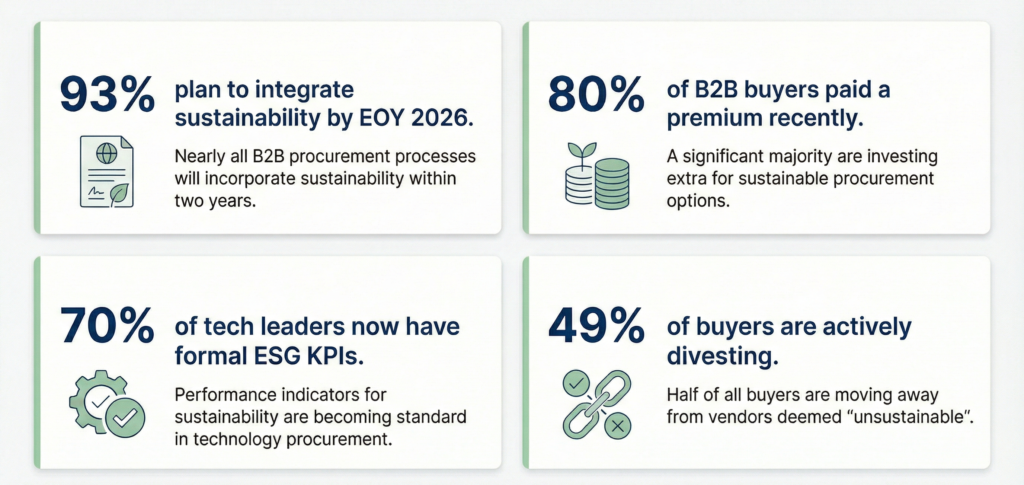
In the B2B world, sustainability isn’t a “one-off” campaign; it’s an ecosystem. If your marketing doesn’t align with your operations and your customer’s values, the market will sniff out the inconsistency in seconds. To build a strategy that sticks, you need to balance three specific areas:
1. Radical Supply Chain Transparency
Today’s B2B buyers aren’t just buying your software or service; they are “buying” everyone you do business with. Sustainable marketing in 2026 starts with being an open book about your vendors, carbon footprint, and labor practices. If you can’t map your impact, you can’t market it.
2. Value-Based Content Lifecycle
Stop the “churn and burn” content model. A sustainable strategy focuses on high-utility, “evergreen” assets that provide value for years, rather than high-frequency, low-quality posts that clutter digital space. It’s about being a signal in the noise, not adding to the digital waste.
3. The “Double Bottom Line” Messaging
Your marketing must prove that sustainability increases profitability or efficiency for the client. In B2B, if a “green” solution costs 2x and performs at 0.5x, it’s not a sustainable business choice. Your messaging must bridge the gap between “doing good” and “doing well.
Case Study – Joyride Coffee
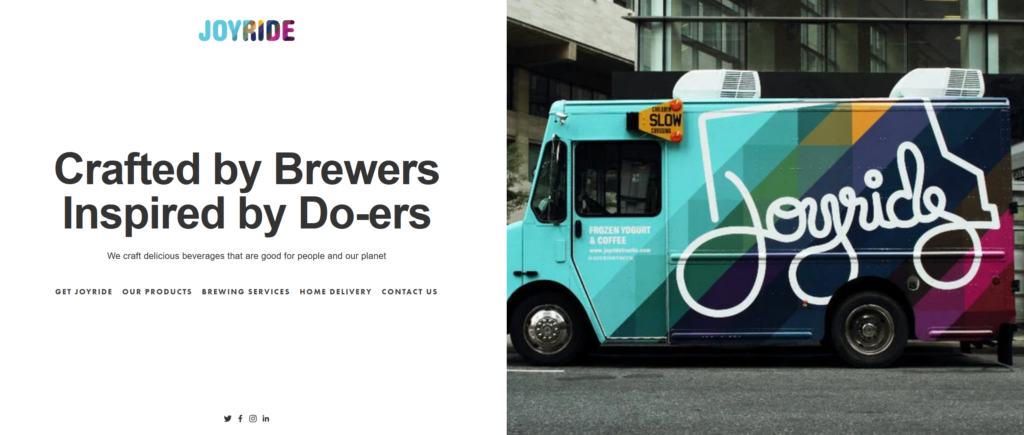
Joyride Coffee is a brand built on the pillars of sustainability and inclusivity. As a company attempting to transcend the standard beverage model, they partnered with us to translate those values into a high-performance digital presence.
Sustainable Brand Development
The collaboration focused on moving beyond simple transactions to tell a deeper story about people and the planet. We overhauled the website design and user experience to ensure the brand’s ethical ethos was integrated into every customer touchpoint, from the homepage to the product pages.
Measurable Results
By applying a data-backed approach to their email automation and SEO strategy, we achieved significant shifts in engagement:
- Welcome Email Open Rates increased from 21% to 71.4%.
- New Browse Abandonment Flows achieved a 92% open rate.
- SEO Optimization through extensive keyword research and content strategy drove targeted organic traffic through long-form guides and blogs.
Why Sustainable Marketing is Non-Negotiable in 2026
1. The “Scope 3” Regulatory Domino Effect
Large enterprises are now legally required to report on their Scope 3 emissions—the carbon footprint of their entire value chain. If your company is a vendor for a Fortune 500 firm, your carbon footprint is now their liability. Sustainable marketing is your way of proving you are an asset to their balance sheet, not a risk to their compliance.
2. Radical Procurement Scrutiny
The modern procurement process has evolved. RFPs (Requests for Proposal) that once focused solely on “Price vs. Performance” now include weighted sections on ESG (Environmental, Social, and Governance) metrics.
- The Reality: If you cannot articulate your sustainability value proposition, you may be disqualified before the first discovery call.
3. Talent Acquisition and Retention
In 2026, the “War for Talent” is won by brands with a conscience. High-level B2B consultants, engineers, and developers are increasingly choosing employers whose values align with their own. Sustainable marketing acts as a beacon for top-tier talent, reducing the massive costs associated with turnover and recruitment.
4. Resilience Against “Green-Hushing”
As “greenwashing” penalties become more severe, many brands have retreated into “green-hushing”—staying silent about their initiatives out of fear of being audited.
The Opportunity: By leading with a robust, data-backed sustainable marketing strategy, you fill the silence left by your competitors, positioning your brand as the transparent, courageous leader in a cautious market.

Effective B2B Sustainable Marketing Strategies
1. Supply Chain Transparency
In 2026, you need to be an open book about your vendors and labor practices. Since B2B buyers are effectively “buying” your entire network, mapping and sharing your supply chain impact is essential to satisfy procurement teams.
2. Verified Data and Audits
Shift from promises to proof by providing raw data and third-party audits. Create a central repository where clients can download certifications and carbon accounting reports without having to talk to a salesperson first.
3. Evergreen Content Strategy
Stop the “churn and burn” model of high-frequency posting. Focus on high-utility assets that provide value for years. This reduces digital waste and ensures your brand remains a reliable signal in a noisy market.
4. Business Value Alignment
Your messaging must prove that sustainability increases a client’s profitability or efficiency. If a sustainable solution doesn’t perform as well as (or better than) legacy options, it won’t be seen as a viable business choice.
5. Scope 3 Client Support
Position your services as a way for your clients to meet their own sustainability mandates. By aligning your metrics with their Scope 3 reporting needs, you become a strategic asset to their balance sheet rather than a risk.
Build your Strategy with The Growth Shark
Most agencies focus on short-term spikes. We at The Growth Shark help you build marketing ecosystems that prioritize long-term brand equity and radical transparency. If you are ready to move from empty claims to data-backed authority that procurement teams trust, schedule a discovery call for a free strategic session.